I tried laser removal on my brows and it didn't work (or made it worse) — what now?
Written by Aileen Nguyen · Licensed & Insured Esthetician · Reviewed July 2026
You are not an unusual case. Laser removal on eyebrow tattoos commonly stalls after two or three sessions because the pigment left behind sits in a layer the laser pulse cannot reach cleanly without further heating the surrounding tissue — and the clinic quite reasonably stops before that happens. The brow is now partially faded, often with a cooler residual colour (grey, blue, slight green) and sometimes with thinner brow hair in the treated area. Non-laser lifting can almost always finish the job from here, though the timeline is longer than it would have been starting fresh, because the residual pigment is both lighter and more deeply embedded than typical first-session work. The brow hair that remains is yours to protect for the rest of the course; nothing more should be done that risks losing more of it.
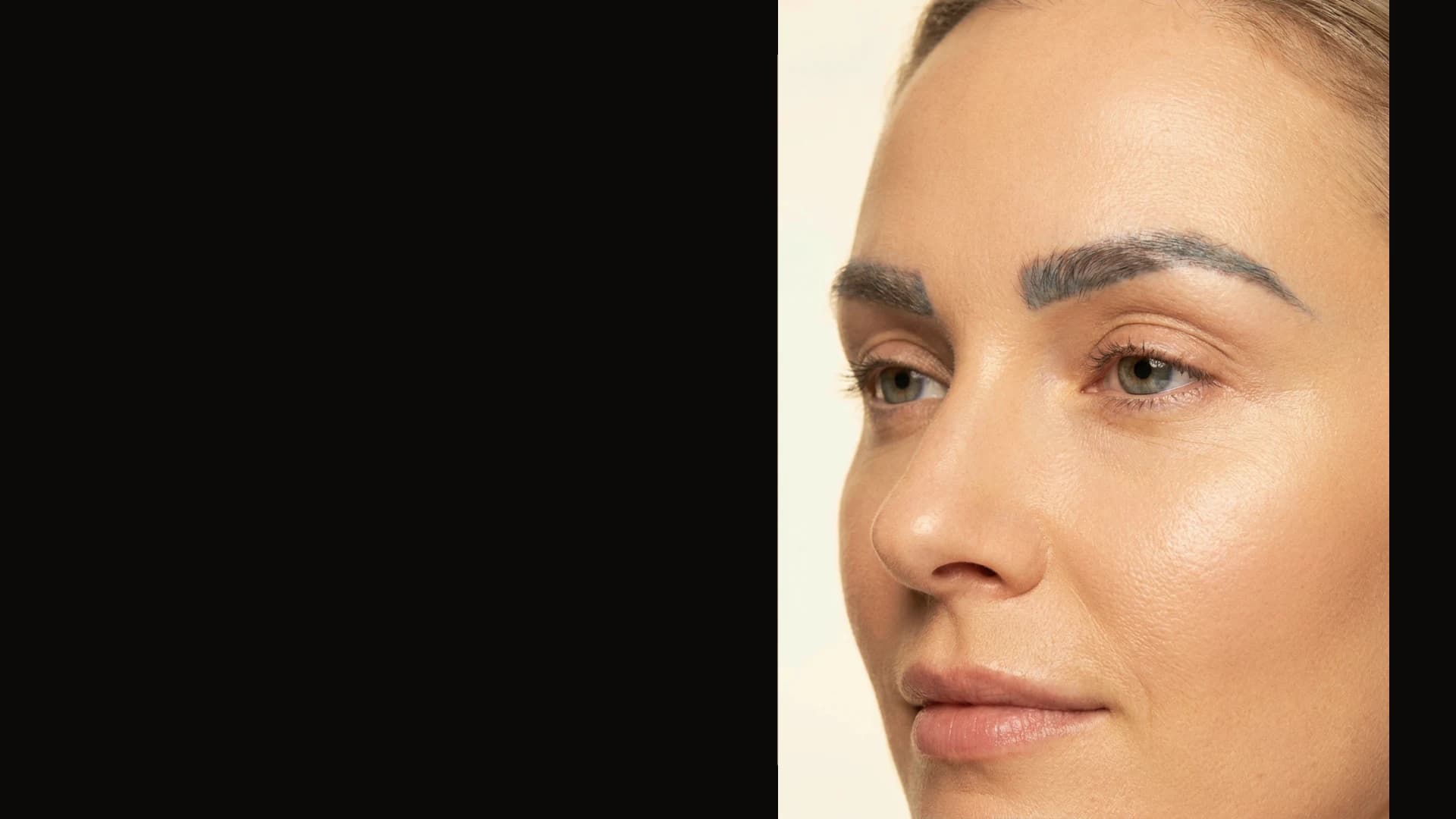
Why laser stalls on brows (and the clinic is right to stop)
A pico-class or Nd:YAG laser pulse works by delivering extremely short bursts of light energy that break pigment into particles small enough for the lymphatic system to carry away. The energy that breaks the pigment is also partially absorbed by the surrounding tissue and the hair follicles embedded in it. On a body tattoo, that collateral heating is irrelevant. On an eyebrow, the hair follicles are concentrated enough that repeated sessions can thin the brow permanently.
A responsible laser clinic watches for that risk and will often stop treatment after the brow reaches a certain level of fading, even if some pigment remains. The clinic is not failing you by stopping — they are protecting the hair you still have. The problem is that most clients hear 'we have gone as far as we can' and interpret it as 'this is the result you have to live with.' It is not. The partial-removal state is a different problem than the original brow, and it has different solutions.
What a laser-stalled brow actually looks like
Three patterns show up consistently. The first is a cool residual tone — the warm browns in the original pigment lift off first, leaving a cooler base (grey, blue, slight green) that reads as 'off' in natural light even though the brow is lighter overall than it was. The second is uneven fade — a brow that is noticeably lighter in some areas and still saturated in others, usually because the pigment depth was not uniform in the original work. The third is modest hair thinning in the treated area, which may be temporary (hair that grows back over the following nine to twelve months) or permanent, depending on how aggressive the sessions were.
None of these three is a dead end. Cool residual tone responds well to non-laser lifting because the lifting chemistry works on the specific pigment particles the laser left behind, which are smaller and shallower than fresh microblading. Uneven fade is a map, not a problem — I can treat the saturated areas more intensively while leaving the lighter areas alone. And the hair question is one I will not dodge: whatever grew back by the time you reach me is likely what you have, and the rest of the removal plan has to protect that.
What non-laser lifting does from here
The partial-removal state is actually easier for non-laser lifting than fresh microblading in one specific way: the pigment that laser left behind is lighter and often more fragmented, which the lifting chemistry can work on more efficiently. The harder-than-fresh part is that it is often sitting deeper than typical microblading (the laser pulses pushed what did not break into a less-accessible layer), so the per-session clearance can be smaller than it would be on an untreated brow.
In practice, most laser-stalled brows take two to four sessions of non-laser lifting to resolve cleanly, spaced four to six weeks apart. That is on top of whatever laser sessions you already had, which is frustrating. The honest version is that if we could roll time back, non-laser from the start would usually have been fewer total sessions than what you have ended up with — but we cannot roll time back, and finishing from here is still the better call than living with the stalled result.
Protecting the brow hair you still have
This is the part that matters most and gets covered least in post-laser articles. The hair that is still in the treated area is the hair you are going to walk out of removal with. Every subsequent decision — which removal method, how aggressive the sessions are, how long between them — should be made with that hair in mind.
Non-laser lifting does not use heat, so it does not add to the hair-loss risk. What it does do is physically disturb the skin during the treatment, which means the hair in the treated area goes into a brief shed cycle after each session. That shedding is normal and the hair returns, but it is one more reason to space sessions at least four weeks apart rather than rushing them. If anyone offers to compress the schedule for a faster finish, that is the moment to say no. The brow hair is non-negotiable; everything else, including total timeline, is negotiable.
What this costs, honestly
A laser-stalled brow usually takes two to four non-laser sessions at $280 to $380 per session, so the finishing cost is $560 to $1,520 in most cases. That is on top of what you already spent on laser, which is why the full retrospective cost of a laser-then-non-laser path is often higher than a non-laser path from the start. If you are at the decision point and have not yet committed to either, that is worth knowing.
The one case where the stacked cost is still worth it: if the original pigment was deep enough that non-laser alone would have been eight or ten sessions, the laser-then-non-laser path may actually be lower total sessions than a pure non-laser one. That is why I ask about laser history during every assessment — not to judge the earlier choice, but because the residual-pigment profile I am looking at today determines the plan from here.
What to send me
Text to (650) 305-8036 three things: a clear photo of your brows in natural light with no makeup, a brief note on roughly when the laser sessions were and how many you had, and whether you noticed any hair thinning in the treated area. That is enough for me to give you an honest read on how many more sessions it is likely to take, what the per-session cost will be, and whether there is anything to watch out for specific to the pigment you are left with.
I will not try to sell you a package before the read. If I think the right next step is to wait a few more months for the laser-treated area to settle before any more work, I will say so. If I think the shape of what remains is close enough to acceptable that further removal is a bad trade for the hair, I will say that too. The read is free and it is the only honest way to answer this question.
Wondering about your own brows? See real client results or read how non-laser removal works. Consultations at the Campbell studio are unhurried and honest.
About the studio
Aileen’s Beauty — Campbell, California
Aileen’s Beauty is a private, appointment-only studio at 816 West Hamilton Avenue in Campbell, California, specializing in non-laser eyebrow tattoo removal. Every appointment is performed personally by Aileen Nguyen, a licensed and insured esthetician with over ten years of experience, one guest at a time.
The studio uses the Aileen Beauty Method — its own non-laser removal solution rather than a saline product — to lift unwanted microblading, powder brow, ombré and permanent makeup pigment while leaving the natural brow hair in place. Sessions are spaced four to six weeks apart and typically run $280–$380 each. Aileen’s Beauty holds a 4.9-star average across more than 200 client reviews and serves Campbell, San Jose, Santa Clara, Cupertino, Los Gatos and Saratoga.
816 West Hamilton Avenue, Campbell, CA 95008 · 650-305-8036 · Appointment only